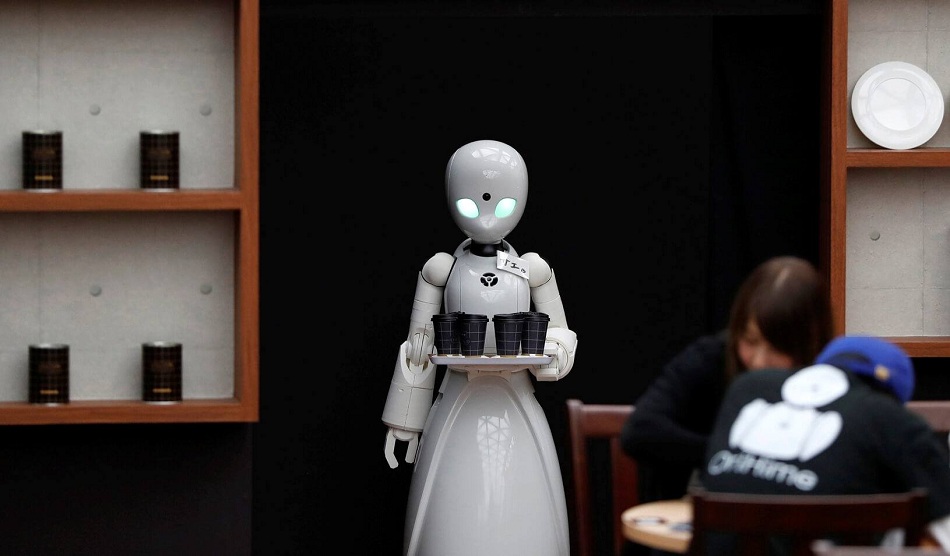
In many parts of the U.S., robots are replacing workers over the previous couple of decades. But to what extent, really? Some technologists have forecast that automation will cause a future without work, while other observers are more skeptical about such scenarios.
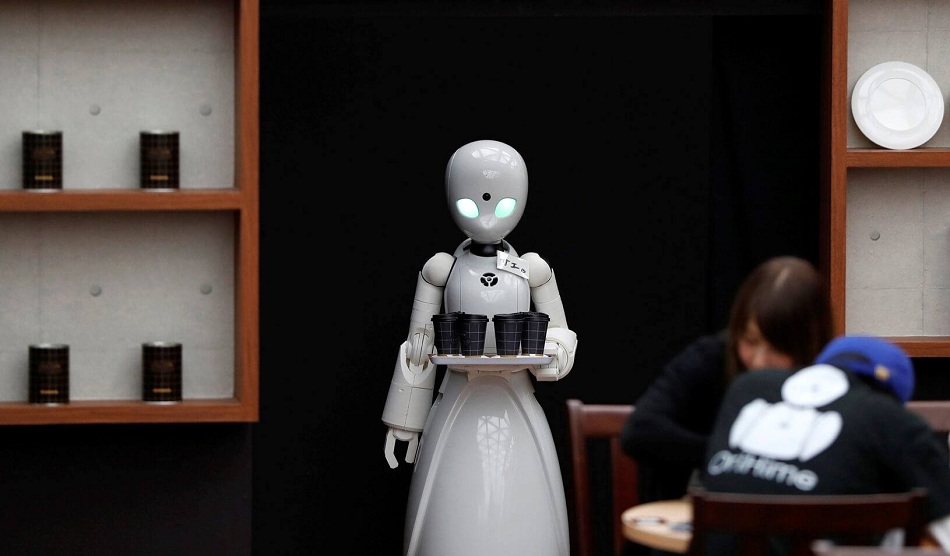
Now a study co-authored by an MIT professor puts firm numbers on the trend, finding a really real impact — although one that falls well in need of a robot takeover. The study also finds that within the U.S., the impact of robots varies widely by industry and region, and should play a notable role in exacerbating income inequality.
MIT economist Drano Acemoglu says although he notes that the impact of the trend is often overstated.
That increased use of robots within the workplace also lowered wages by roughly 0.4 percent during an equivalent period of time.
“We find negative wage effects, that workers are losing in terms of real wages in additional affected areas because robots are pretty good at competing against them,” Acemoglu says.
Displaced in Detroit
To conduct the study, Acemoglu and Restrepo used data on 19 industries, compiled by the International Federation of Robotics (IFR), a Frankfurt-based industry group that keeps detailed statistics on robot deployments worldwide. the students combined that with U.S.-based data on population, employment, business, and wages, from the U.S. Bureau of the Census, the Bureau of Economic Analysis, and therefore the Bureau of Labor Statistics, among other sources.
The researchers also compared robot deployment within the U.S. thereto of other countries, finding it lags behind that of Europe. From 1993 to 2007, U.S. firms actually did introduce almost exactly one new robot per 1,000 workers; in Europe, firms introduced 1.6 new robots per 1,000 workers.
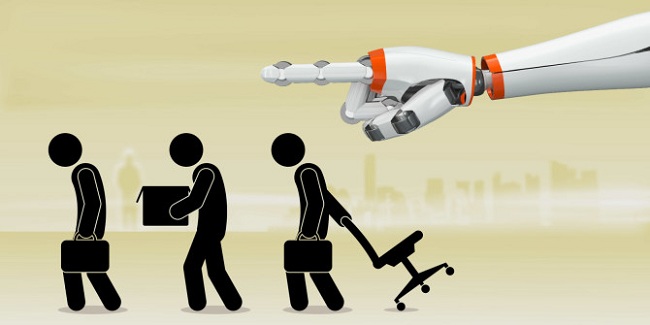
“Even though the U.S. may be a technologically very advanced economy, in terms of commercial robots’ production and usage and innovation, it’s behind many other advanced economies,” Acemoglu says.
In the U.S., four manufacturing industries account for 70 percent of robots: automakers (38 percent of robots in use), electronics (15 percent), the plastics and industry (10 percent), and metals manufacturers (7 percent).
Across the U.S., the study analyzed the impact of robots in 722 commuting zones within the continental U.S. — essentially metropolitan areas — and located considerable geographic variation in how intensively robots are utilized.
Given industry trends in robot deployment, the world of the country most affected is that the seat of the car industry. Michigan has the very best concentration of robots within the workplace, with employment in Detroit, Lansing, and Saginaw affected quite anywhere else within the country.
“Different industries have different footprints in several places within the U.S.,” Acemoglu observes. “The place where the robot issue is most apparent in Detroit. Whatever happens to automobile manufacturing features a much greater impact on the Detroit area [than elsewhere].”
In commuting zones where robots were added to the workforce, each robot replaces about 6.6 jobs locally, the researchers found. However, during a subtle twist, adding robots in manufacturing benefits people in other industries and other areas of the country — by lowering the value of products, among other things. These national economic benefits are the rationale the researchers calculated that adding one robot replaces 3.3 jobs for the country as an entire.
The inequality issue
In conducting the study, Acemoglu and Restrepo visited considerable lengths to ascertain if the utilization trends in robot-heavy areas may need to be been caused by other factors, like national trading policy, but they found no complicating empirical effects.
The study does suggest, however, that robots have an immediate influence on income inequality. The manufacturing jobs they replace come from parts of the workforce without many other good employment options; as a result, there’s an immediate connection between automation in robot-using industries and sagging incomes among blue-collar workers.
“There are major distributional implications,” Acemoglu says. When robots are added to manufacturing plants, “The burden falls on the low-skill and particularly middle-skill workers. That’s really a crucial part of our overall research [on robots], that automation actually may be a much bigger a part of the technological factors that have contributed to rising inequality over the last 30 years.”
So while claims about machines wiping out human work entirely could also be overstated, the research by Acemoglu and Restrepo shows that the robot effect may be a very real one in manufacturing, with significant social implications.
“It certainly won’t give any support to those that think robots are getting to take all of our jobs,” Acemoglu says. “But it does imply that automation may be a real force to be grappled with.”
 5Star Tech